
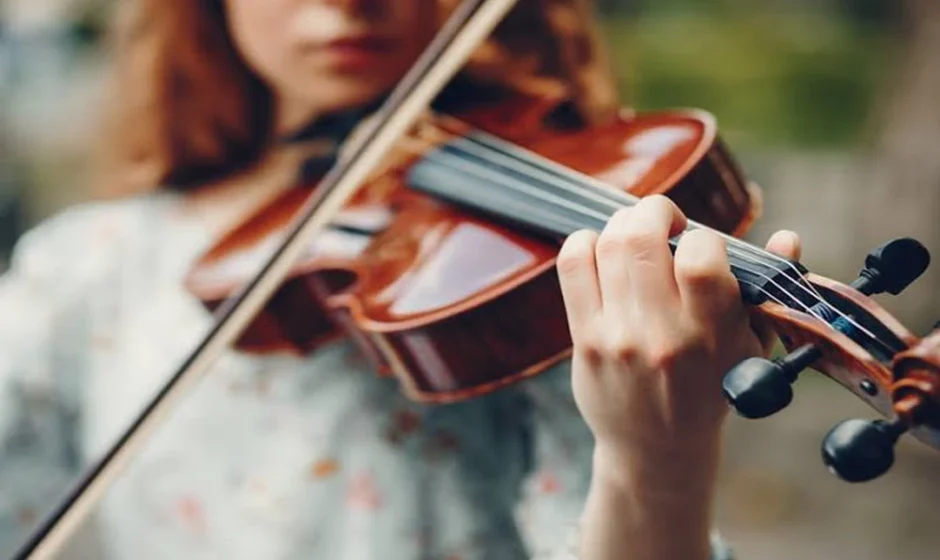

Anyone starting violin expecting to play a recognisable tune within the first few lessons is heading for early disappointment, and that mismatch between expectation and reality causes more early dropouts than any actual lack of ability. The first months of violin lessons in Singapore, regardless of which studio or tutor a student chooses, are almost entirely about posture, bow hold and producing a clean sound on open strings, none of which sounds like music to an outside ear even though it is exactly the foundation real playing depends on.
The First Few Lessons Are Not About Playing Tunes
Holding the instrument correctly, positioning the left hand without collapsing the wrist, and drawing the bow in a straight line across the string take weeks to become automatic, and a teacher who rushes past this to get to a recognisable melody is setting up bad habits that take far longer to correct later than they would have taken to establish properly. Students who understand this in advance tend to stay patient through a stretch that would otherwise feel like no progress at all.
A Typical Weekly Lesson Structure
Most lessons open with a posture and bow-hold check, move into open-string or scale exercises that isolate a specific technical point, and close with whatever piece of repertoire the student is currently working through. The repertoire portion is often the shortest part of the lesson in the first year, even though it is the part a new student is usually most eager to reach, sometimes only the last five minutes of a half-hour session.
The Sound You Will Make in Month One
A beginner’s first sounds on violin are reliably scratchy and inconsistent, not because of any lack of talent but because bow pressure, speed and contact point all need to be coordinated simultaneously, and that coordination takes weeks of repetition to settle. Students who expect anything closer to a pleasant tone in the first month are comparing themselves to an unrealistic standard.
How Long Until Recognisable Music Happens
Most students play a simple, recognisable tune, often a folk melody using only a few notes, somewhere between six and twelve weeks in, depending on practice frequency. Understanding a realistic timeline for early progress on violin before starting prevents the discouragement that comes from comparing week-three progress against an imagined, much faster timeline.
Physical Discomfort That Is Normal Versus Not
Mild finger tenderness on the left hand and slight fatigue in the bow arm’s shoulder are normal in the first weeks as unfamiliar muscles adjust. Sharp pain anywhere, or persistent tension in the neck from an incorrectly positioned chin rest, is not normal and should be raised with the teacher immediately, since it usually points to a setup or posture issue rather than something that will simply resolve with more practice.
How Feedback Is Given and Received
Expect frequent, small corrections within a single lesson, since violin technique involves several simultaneous physical adjustments that a teacher will address one at a time rather than all at once. A student unused to this density of correction can mistake it for criticism, when in a well-run lesson it is simply how the instrument is taught, given how many small physical variables affect the sound, and the correction usually stops once that particular habit settles into something more automatic.
What Homework Between Lessons Looks Like
Practice assignments in the early months are typically short and specific: a particular exercise repeated slowly, a scale played with attention to one technical point, rather than an instruction to simply practise the piece. Following the specific assignment rather than only playing through favourite passages is what actually produces steady progress between lessons, and a student who skips the assigned exercise in favour of the fun part usually shows up to the next lesson with the same correction still unresolved.
Milestones in the First Year
Reasonable first-year milestones include comfortable open-string bowing, basic first-position fingering across all four strings, and a handful of simple pieces played with reasonably steady rhythm. Vibrato, shifting to higher positions, and more expressive bowing techniques typically come later, and a student measuring their own progress against a more advanced player’s technique, perhaps a sibling further along, is measuring against the wrong benchmark entirely.
When Frustration Signals Normal Progress
A plateau where progress feels invisible for several weeks is a near-universal experience on violin, usually right before a technical piece clicks into place, rather than a sign of stalled ability. Frustration that instead centres on dreading the lesson itself, rather than on a specific technical hurdle, is a different signal and worth discussing directly with the teacher rather than pushing through silently.
Setting Expectations That Keep You Going
Knowing in advance what violin lessons in Singapore actually involve in the early months, the slow start, the necessary repetition, the gradual rather than sudden arrival of recognisable music, is what keeps most students through the discouraging early stretch. Students who go in expecting quick, tune-based progress are the ones most likely to quit right before the foundation they built actually starts to pay off.