

College can be expensive. These expenses can exceed what students could otherwise afford based on savings and help to cover tuition, housing, books, meals and transport quite quickly. At this point, private student loans may fill the gap in what students owe.
But convenience should not be the only factor you consider when choosing a lender. Each lender will have their own rates and fees, repayment terms for loans, and borrower requirements.
Start with Your Actual Need
Calculate your gap in education funding before turning to lenders. Enter the expenses you expect to incur when you get to college, then subtract any scholarships or grants you’ve received, other forms of savings and anything else you’d consider financial aid.
How much is remaining can guide how much you might need to borrow. Do not borrow the maximum amount given to you unless you need it. Only borrow what you need to ease your repayment obligations later.
Build a Simple Comparison
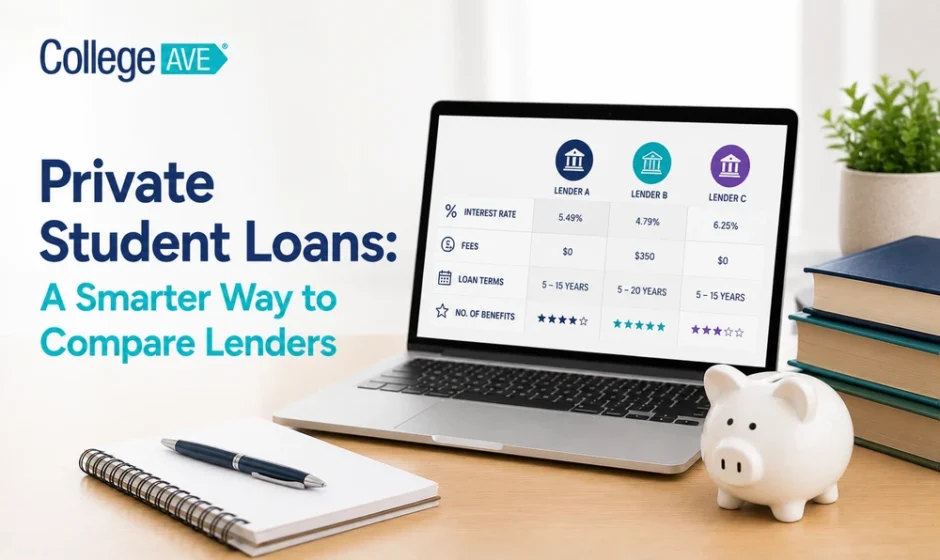
When comparing private student loans lenders, using tables allow you to quickly see differences between offers. Do not get hung up on a single feature.
Pay close attention to:
- Interest rate and fixed or variable
- Repayment period
- Monthly payment estimate
- Loan and application fees
- Cosigner requirements
- Deferment or hardship options
An advertised low interest rate on a loan does not always equal the lowest cost loan. Choose only after reading the terms carefully.
Consider the Interest Rate
The interest charge can manipulate the overall quantity you pay back. A fixed rate typically remains unchanged over the duration of the loan, helping to make predicting payments easier.
Variable rate is a type of loan or credit that is changing over time. It may start lower, but rise later. Before taking this particular type of loan, consider your budget and how you would deal with fluctuations in payments.
Check the Repayment Terms
The repayment period also matters. This leads to lower monthly payments, but a longer term can translate into higher interest paid for the life of the loan.
Consider what your salary will be after graduating. Your payment in the future should work with other payments like rent, food, journey, and savings.
Make an Informed Choice
Private student loans are meant to fill the gap when other sources of education funding fall short. Make sure that there is a payment owed which last numerous years.
Before agreeing to an offer, take the time to comparing private student loans lenders. Check the interest, additional charges, tenure, and total borrowings cost. By picking and choosing carefully, you will be in much better control of your college debt.